Tuesday, May 15, 2007

FLORIDA: U.S. Highway 1 - "Key West, Florida to Fort Kent, Maine".

0 comments

U.S. 1 (also called U.S. Highway 1, and abbreviated U.S. 1) is a United States highway which parallels the east coast of the United States.
It runs 2,390 miles (3,846 km) from Key West, Florida in the south, to Fort Kent, Maine at the Canadian border in the north.

U.S. 1 generally parallels Interstate 95, which is significantly farther inland (west) between Jacksonville, Florida and Petersburg, Virginia. It connects the major cities of the east coast of Florida, including: Miami, Florida; Jacksonville, Florida; Columbia, South Carolina; Raleigh, North Carolina; Richmond, Virginia; Washington, DC; Baltimore,Maryland; Philadelphia, Pennsylvania; New York, New York; New Haven, Connecticut; Providence, Rhode Island; Boston, Massachusetts, Portland, Maine, and onward north to Fort Kent, Maine.

In Florida, where signs for U.S. Highways formerly had different colors for each highway, the "shield" for U.S. 1 was red.
Florida began using the colored shields in 1956, but during the 1980s the MUTCD was revised to specify only a black and white color scheme for U.S. Highway shields.
As such, Federal funds were no longer available to maintain the colored signs.
On August 27, 1993, the decision was made to no longer produce colored signs.
Since then, the remaining colored signs have gradually been replaced by black-and-white signs; at present, there are a few rare colored ones still in place.

Since I was born and raised in Key West, Florida, I had past this sign along the bay side of the island numerous times and I have always wanted to see the "end of that rainbow" Aka - "Fort Kent, Maine", and in September of 2006, I was finally able to travel to Maine and view the U.S. 1 sign that read; "U.S. 1 - Fort Kent, Maine to Key West, Florida".

I was quite pleased, and I found Fort Kent, Maine to be quite charming!

Monday, May 14, 2007

Maine : First Cruise Ship to arrive in Bar Harbor for 2007.

1 comments

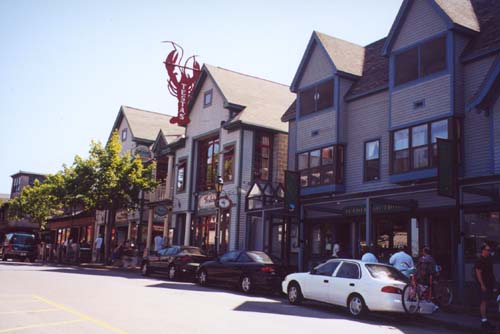
The vessel 'Maasdam' was the first cruise ship of 2007 to stop and let off passengers in downtown Bar Harbor, prompting many shops and restaurants to open their doors.

More than 90 cruise ships are expected to bring more than 130,000 passengers to Bar Harbor this summer and fall, a small portion of the millions that travel onto MDI and into Acadia National Park every year in highway vehicles.

Most of the cruise ships will visit after Labor Day, however, when schools start up again and the number of tourists who drive onto MDI declines.

Maasdam, which can carry as many as 2,200 passengers and crew members, is expected to visit Bar Harbor 17 times through the end of October.

Memorial Day — long recognized as the unofficial start of Maine’s summer tourist season — still two weeks away, not all seasonal businesses have opened up their doors.
The signs of activity are there, however. Workers have been painting and cleaning business facades, while shop employees and deliverers have been stocking the stores and restaurants in anticipation of opening up.

Year-round residents and return visitors will spot a few new retail businesses in Bar Harbor this year and will recognize one popular spot that is coming back after an absence of a few years.
Miguel’s, a longtime popular local Mexican restaurant, is opening again after going through a recent series of owners and even having its menu and name changed.
Local shop owner Veilleux, said Saturday’s sale was a success and hopes to do it again next year.

The weather, Mother’s Day weekend and the Maasdam’s visit all came together to make Saturday seem like a busy mid-summer day, she said.
"It definitely affected our sales," Veilleux said of the cruise ship’s stop. "It almost felt as if we didn’t have a spring."

Wednesday, May 2, 2007

Bar Harbor, Maine: "The Dorr Museum" - Shell shockers

0 comments

Sitting on a little bench in front of a flat-screen TV at College of the Atlantic’s George B. Dorr Museum, Lynn Havsall, a zoologist and manager at the Bar Harbor museum, watched a video loop of a green sea turtle, camera affixed to its shell, paddling evenly across the ocean floor off the coast of Hawaii.

"I can feel my blood pressure lowering just watching it," said Havsall. "You think of turtles as being very slow, but sea turtles can move incredibly fast. They’re perfect swimmers."

At the Dorr Museum, the humble terrapin is the subject of a kid-centric exhibit called "Turtle Travels," which will run through Sept. 10. The show is on loan from the EcoTarium in Worcester, Mass., and is the first traveling exhibit the museum has hosted.

Havsall and her art professor colleague Dru Colbert were instrumental in bringing the show to COA, and felt it spoke to the school’s mission.

"We liked this exhibit because it deals with environmental issues," said Colbert. "The biggest threats to turtles here in Maine are people building in wetlands."

"It’s also great for kids," said Havsall. "It’s interactive, so kids stay interested, and parents get a closer look at things than they normally would."

"Turtle Travels" explores these issues through a series of hands-on stations, that educate about turtle anatomy and the different habitats that they live in. Several illustrated panels along the wall show the ways that turtles appear in mythology around the world — from the story of the African trickster god Anansi being outsmarted by a turtle, to the Native American myth of the giant turtle on which the Earth rests.
Naturally, one of the most popular stations is the tank of live turtles, on loan from the Maine Discovery Museum in Bangor. Swimming around in the U-shaped aquarium is a spotted turtle and a brightly colored painted turtle, both of which are native to Maine.

"The kids really love that one," said Havsall. "You can get underneath it and look up at them and see the bottoms of their shells."

There are seven species of turtle common to Maine: snapping, musk, eastern painted, spotted, Blanding’s, wood and eastern box turtles. Spotted and snapping turtles are easy to find, while Blanding’s and wood turtles have been marked as species of special concern — the wood turtle in particular, thanks to its ornate shell, which makes it a prime target for those looking for a pet. One little-known fact is that several species of sea turtle actually make their way into the Gulf of Maine."In the warmer months, you sometimes get green sea turtles or leatherbacks, though they stay pretty far out," said Havsall.

Both Colbert and Havsall think turtles of all kinds — land and sea, from Maine and from across the world, are an excellent way to explain ecology to kids.

"They are the vehicle through which we explore these issues," said Colbert. "Turtles are so tied to their habitats that when we build in wetlands they show very dramatically the effect it can have on the environment."

The Dorr Museum is open by appointment through mid-June, when it is open from 10 a.m. to 5 p.m. Monday through Saturday until Labor Day.
For information, call 288-5015 or visit www.coamuseum.org.

Bar Harbor, Maine - "Cat’s early-afternoon arrival pleases tourist groups".

0 comments


Bay Ferries’ decision to have the Cat arrive in the early afternoon in Yarmouth from Portland and Bar Harbor could have a beneficial impact on tourism, says an industry spokesman.

Bay announced several months ago it would change the 2007 sailing schedule for its high-speed ferry between Yarmouth and Maine. Two of the changes, a slightly shorter season and a decision not to increase sailings to Bar Harbor to two a day during a period in summer, were done to ease a tight dry-docking schedule in May and to save money.

"At the start of the season there are a couple of factors in play," Bay president and CEO Mark MacDonald said in an interview. "We always have a timing issue in May because that is when we dry-dock the ship. It is booked for a certain amount of winter work until the second of May and then comes to the shipyard in Halifax and this year we have some fairly major technical work going on. It is routine but still time consuming so it will be in dry dock for two to three weeks."

Bay previously started its Yarmouth season in late May but this year won’t start until June 1. Passenger levels last May were low.

Doug Fawthrop, spokesman for the Destination Southwest Nova Scotia Association, a partnership of tourist groups, said Monday the change in the arrival schedule will be positive, since the Cat will arrive in Yarmouth in the early afternoon instead of the evening.

"I guess we come from a school where anything we can do that is in the best interest of the customer is always the right thing to do and that’s (arrival change) in the best interests of the customer," Mr. Fawthrop said.

He said some accommodations’ operators may have benefited "marginally" from the evening arrivals, but they are only part of the industry.

"Restaurants suffer under those circumstances, gift shops and all other levels and components of the tourism sector ... so the early day will benefit more people. At the end of the day this is about total (spending) and I think this will help that."

Mr. Fawthrop said it is important to note that Bay offers one- and two-night overnight packages from Portland and Bar Harbor. Few people would be inclined to purchase the one-night package if they arrived in the evening and had to be back on the boat early the next morning.

"From Bar Harbor there is also a significant day-trip component so I think it gives Bay Ferries an opportunity to provide more benefit to the Nova Scotia tourism industry."

From June 1 to July 10 and Sept. 3 to Oct. 9, the Cat will leave Bar Harbor four mornings a week, Monday through Thursday, and return three afternoons a week, Monday through Wednesday.

On Thursday afternoons, it will leave Yarmouth and go to Portland. It will operate between Portland and Yarmouth from Friday through Sunday.

From July 11 to Sept. 2, sailings between Portland and Yarmouth will increase by one a day.

The vessel will do the Bar Harbor-Yarmouth run Monday through Wednesday, go to Portland on Wednesday afternoon and operate between Portland and Yarmouth from Thursday to Sunday.

All departures from Yarmouth will be at 4 p.m. and from Maine ports at 8 a.m.

Earth Day - BAR HARBOR, MAINE - "Bar Harbor college goes all out for Earth Day".

0 comments

Some schools have homecoming weekend; College of the Atlantic has Earth Day.

"Earth Day is the only celebration that COA has really stopped everything to recognize," said Milja Brecher-Demuro, coordinator for the school’s festivities, which were held Saturday, April 21. "Since the beginning of the school, that’s one that we’ve celebrated, for the main reason that it speaks exactly to what COA is about."

Thanks to phenomena such as Al Gore’s documentary, >"An Inconvenient Truth," the environment has been an especially hot topic over the past year. Now more than ever, the issues that COA students study are at the forefront of national consciousness.
"There’s been a lot of questioning about what’s gone wrong. We are looking to celebrate what’s going right, and what’s beautiful about the earth," said Brecher-Demuro. "We’re looking at the forward thinkers, and those who have worked to help us have a smaller footprint on the earth, and to have it last as long as possible."

To that end, the theme for this year was "Home is Where the Earth Is: A Celebration in Renewing Community," and events focused especially on community involvement in making Earth a cleaner, better place to live.
There were several additions to the usual lineup of lectures, workshops, children’s activities and food, including the first "COA-Palooza," featuring an evening of music from COA students and alumni.
Keynote speaker Cathy Johnson, North Woods project director for the Natural Resources Council of Maine and a 1974 COA alumna, gave a talk about the future of Maine’s North Woods. Lectures about environmentally friendly parenting, midwifery, alternative education and socially responsible retirement planning were held as scheduled.
Earth Day this year also functioned as an alumni weekend, with former students from around the country invited to attend. Some of these alumni were part of the photography exhibit at the Ethel H. Blum Gallery, while others were participating in the daylong alumni film festival at McCormick Hall.

Florida Keys - 'ROCK STARS' TO RULE THE FLORIDA KEYS REEF DURING UNDERWATER MUSIC FESTIVAL

0 comments

Beautiful music is made underwater, pretending to play faux musical instruments. This year's theme is 'Rock Stars.' Participants in the Underwater Music Festival at Looe Key Reef in the Florida Keys National Marine Sanctuary have fun prancing and pretending to play music during the six-hour subsea radio broadcast.

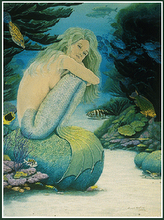
LOOE KEY, Florida Keys - Rock legends are to celebrate the "key of sea" in Lower Keys waters Saturday, July 14, as divers portraying Sonny and Cher, Elton John, David Crosby and even a mermaid Madonna rock the reef during the 23rd annual Underwater Music Festival.
The scuba-diving superstars are to "perform" beneath the waves during the offbeat underwater event, which draws as many as 600 divers and snorkelers each year to explore the colorful diversity of marine life that characterizes North America's only living coral barrier reef.

The underwater songfest is set for 10 a.m. to 2 p.m. at Looe Key Reef, an area of the Florida Keys National Marine Sanctuary located approximately six miles south of Big Pine Key. Staged by local radio station WWUS 104.1 FM, it features the station's selections broadcast underwater via Lubell Laboratory speakers suspended beneath boats positioned at the reef.
The playlist typically includes ocean-themed ditties such as the Beatles' "Yellow Submarine, " Jimmy Buffett's "Fins" and even an authentic humpback whale song.
Photos by Bill Keogh/Florida Keys News Bureau.

Saturday, April 7, 2007

FLORIDA: Key Largo - M.M.C. - Update on "Castaway" the Dolphin - "Chat-Line experiment".

0 comments


KEY LARGO, Fla. – A marine mammal rehabilitation facility opened a dolphin “chat-line” of sorts Saturday, hoping to teach a deaf dolphin's unborn calf to communicate.

Castaway, as the stranded Atlantic bottle nose dolphin has been named, has been recovering at the Marine Mammal Conservancy since Jan. 30Th. 2007. A battery of tests has confirmed she is deaf.

Dolphins need to hear echoes of sounds they produce to find food, socialize and defend themselves against predators.
“We asked ourselves 'How do we get the calf to speak when we have a deaf mother?'” said Robert Lingenfelser, the conservancy's president.

They decided to electronically connect Castaway's habitat with a lagoon at Dolphins Plus, a research and interactive educational facility a few miles down the Keys Overseas Highway. Underwater speakers and microphones were installed at both locations and connected via phone lines.

Castaway should deliver her calf in about a month.

“Even before it is born, we want the calf to have an idea of what normal dolphin vocalization is,” Lingenfelser said.

On the Net:
Marine Mammal Conservancy: www.marinemammalconservancy.org

Thursday, March 15, 2007

Monday, March 12, 2007

MAINE VACATION - 2006 - 2007

3 comments


* "Looking Forward To Returning Back To Maine!!!"

Thursday, March 8, 2007

FLORIDA: KEY WEST - The Southernmost House - Grand Hotel & Museum.

0 comments

The Southernmost House was built in 1896 for a cost of $250,000 (approximately $6 million today) by Judge J. Vining Harris, who married into the prominent Curry family. In 1939 the Ramos family purchased the property, which had been converted into a Cuban nightclub called Café Cayo Hueso (Bone Island Café), for $49,000. In 1954 it was converted back into a residence and remained so until 1996 when a $3 million restoration began to turn it into a 13-room hotel, with a museum on the first floor.
Today 43 U.S. presidential signatures are on display including William Henry Harrison's, which is a rare piece of historic memorabilia, as is President Johnson's original swearing-in statement.
The Ernest Hemingway room boasts a large collection of written memorabilia including letters to friends, relatives, and professional acquaintances.
Artifacts and treasure salvaged by Whitey Keevan from the shipwreck of a Spanish galleon are also on display and for sale.
Exterior paint colors are authentic, as are elegant crown moldings, ceiling medallions, ornamental woodwork and friezes, which were originally painted white, but have been redone in splashy shades reminiscent of its days as a Cuban nightclub.

Tuesday, March 6, 2007

FLORIDA: Key Largo - Jules' Undersea Lodge.

1 comments


When guests visit Jules’ Undersea Lodge in Key Largo, Florida, they discover that the name is no marketing gimmick. Just to enter the Lodge, one must actually scuba dive 21 feet beneath the surface of the sea. Jules’ really is underwater. Diving through the tropical mangrove habitat of the Emerald Lagoon and approaching the world’s only underwater hotel is quite an experience. Even from the outside, Jules’ big 42 inch round windows cast a warm invitation to come in and stay a while, relax and get to know the underwater world that so few of us have even visited.

Entering through an opening in the bottom of the habitat, the feeling is much like discovering a secret underwater clubhouse. The cottage sized building isn’t short on creature comforts: hot showers, a well stocked kitchen (complete with refrigerator and microwave), books, music, and video movies. And of course there are cozy beds, where guests snuggle up and watch the fish visit the windows of their favorite underwater “terrarium”. Jules’ Undersea Lodge manages to reach a perfect balance of relaxation and adventure.

Guests sometimes describe their visit to inner space as the most incredible experience of their lives. One couple decided on a career change after visiting Jules’ Undersea Lodge, and they now operate Aquanauts’ Dive Shop. Another couple named their baby after Jules’, when they later discovered their recently conceived child had accompanied them in their wonderful adventure in undersea living.

Although the underwater hotel may sound like the latest tourist fun spot, Jules' Undersea Lodge, actually began its existence as La Chalupa research laboratory, an underwater habitat used to explore the continental shelf off the coast of Puerto Rico. The authenticity of the underwater habitat is what really sets it apart from amusement parks and other similar attractions. The mangrove lagoon in which Jules' is located is a natural nursery area for many reef fish. Tropical angelfish, parrotfish, barracuda, and snappers peek in the windows of the habitat, while anemones, sponges, oysters and feather duster worms seem to cover every inch of this underwater world. Guests of the Lodge explore their marine environment with scuba gear provided by Jules' Undersea Lodge and are given an unlimited supply of tanks. Jules' Undersea Lodge may have a comfortable futuristic decor, but its sense of history is inescapable. It is the first and only underwater hotel, but is also the first underwater research lab to have ever been made accessible to the average person.

“Marine life is actually enhanced by the presence of an underwater structure”, explains Ian Koblick, owner and co-developer of the Lodge. “Jules’ Undersea Lodge serves as an artificial reef, providing shelter and substrate for marine animals. And the flow of air to the Lodge constantly adds oxygen to the entire surrounding body of water, creating a symbiotic relationship between the technology of man and the beauty of nature.”

The entire structure of Jules’ Undersea Lodge is underwater, sitting up on legs approximately five feet off the bottom of the protected lagoon. The Lodge is filled with compressed air, which prevents the water from rising and flooding the rooms. A five by seven foot “moon pool” entrance in the floor of the building makes entering the hotel much like surfacing through a small swimming pool. Divers find themselves in the wet room, the center of three compartments that make up the underwater living quarters. The wet room, as the name implies, is where divers leave their gear, enjoy a quick hot shower and towel-off before entering the rest of the living area. Designed for comfort, the air conditioned living space has two private bed rooms and a common room. The eight by twenty foot common room is a multi-purpose room providing the galley, dining and entertainment areas. Each of the bedrooms and the common room is equipped with telephone, intercom, VCR/DVD and a stereo sound system. But the main focus of attention is the big 42 inch round window that graces each room. “Waking up to view a pair of angelfish looking in your bedroom window is a moment you'll never forget”, states Koblick.

Habitat operations are monitored by the Mission Director from the land-based “Command Center”, located at the edge of the Emerald Lagoon. The control center is connected to Jules’ Undersea Lodge by an umbilical cable which delivers fresh air, water, power, and communications. “The entire facility is monitored 24 hours a day by our staff”, says Koblick, “the Lodge has independent support systems as well as redundant backup systems. We’ve taken every step to ensure a safe yet exciting adventure for our guests”.

Sunday, March 4, 2007

The FLORIDA KEYS: The Seven Mile Bridge.

0 comments


The Seven Mile Bridge, in the Florida Keys, runs over a channel between the Gulf of Mexico and the Florida Strait, connecting Key Vaca (the location of the city of Marathon, Florida) in the Middle Keys to Little Duck Key in the Lower Keys. Among the longest bridges in existence when it was built, it is one of the many bridges on US 1 in the Keys, where the road is called the Overseas Highway.

There are two bridges in this location. The older bridge, originally known as the Pigeon Key-Moser Channel-Pacet Channel Bridge, was constructed from 1909-1912 under the direction of Henry Flagler as part of the Florida East Coast Railway's Key West Extension, also known as the Overseas Railroad.

This bridge was badly damaged by the Labor Day Hurricane of 1935, and subsequently refurbished by the United States Federal Government as an automobile highway bridge. It had a swing span that opened to allow passage of boat traffic, near where the bridge crosses Pigeon Key, a small island where a work camp for Flagler's railroad was located. Hurricane Donna in 1960 caused further damage.

The present road bridge was constructed from 1979 to 1982. The vast majority of the original bridge still exists, used as fishing piers and access to Pigeon Key, but the swing span over the Moser Channel of the Intracoastal Waterway has been removed.

The new bridge is a box-girder structure built from precast, prestressed concrete sections, comprising 440 spans. Near the center, the bridge rises in an arc to provide 65-foot-high clearance for boat passage. The remainder of the bridge is considerably closer to the water surface. The new bridge does not cross Pigeon Key.

The total length of the bridge is actually 35,862 ft or 6.79 miles (10.93 km).

The spectacular bridge has attracted many film makers. Its film 'credits' include scenes in True Lies, 2 Fast 2 Furious, Licence to Kill and Up Close & Personal. In True Lies, filmed in the early 1990s, a section of the old bridge is shown being destroyed by missile strikes. The missiles were edited in, and the explosions were done on an 80-foot (24 m) model of the bridge, but filming was done on the actual bridge, and the "destroyed" section is the former swing span, which had been removed upon completion of the new bridge.

Each April the bridge is closed for approximately 2.5 hours on a Saturday and a "fun run" of 1,500 runners is held commemorating the Florida Keys bridge rebuilding project.

MAINE: Fort Knox - Prospect, Maine -"American Forts From Maine to Florida"

0 comments


Fort Knox is located on the west bank of the Penobscot River in Prospect, Maine, in an area known as the Penobscot Narrows, Fort Knox is one of the best preserved fortifications on the New England seacoast. The Fort has many architectural features present only to itself, as well as a rich history behind it's cannon batteries.
Maine was repeatedly involved in northeast border disputes with British Canada, and the area between Castine and the rich lumber city of Bangor was invaded and occupied by the British during the American Revolution and the War of 1812. Despite the Webster-Ashburton Treaty of 1842, Fort Knox was established in 1844 to protect the Penobscot River valley against a possible future British naval incursion.

The Fort was engineered by famous West Point graduate Isaac Ingalls Stevens, who superintended fortifications on the New England coast from 1841 until 1849. Named for Major General Henry Knox, America’s first Secretary of War, friend of first president George Washington, and a native of Maine. The Fort garrisoned troops from 1863 to 1866, mostly volunteers who were in training before being sent to their active posts, including members of the celebrated 20th Maine, and again in 1898, but never saw military action.

Explore the Fort and discover this treasure of Maine and United States History. Fort Knox is open May 1 - Nov 1, from 8:30 - sunset. The grounds are open year round for your visiting pleasure.

FLORIDA: Fort Jefferson, Dry Tortugas - American Forts from Maine to Florida

0 comments


After the War of 1812, a group of forts from Maine to Texas was envisioned to provide defense for the United States of America from foreign invaders. Fort Jefferson was built to protect the southern coastline of the United States and the lifeline of commerce to and from the Mississippi River. The fort was planned to be the greatest of the group.

Fort Jefferson is a six-sided building constructed of 16 million handmade red bricks. In 1825, a lighthouse was built on Garden Key, one of six islands that make up the Dry Tortugas, to provide warning to sailors about the dangers of reefs and shoals surrounding the Dry Tortugas.

Construction of the fort began in 1846, and in 1847 the islands became a military reservation. In 1850, the officers' quarters were completed and the fort was officially named Fort Jefferson, after our country's third President Thomas Jefferson. The walls reached their final height of 45 feet in 1862.

Construction of the fort dragged on for more than 30 years, and it was never really finished. Construction of the moat was also an engineering challenge and was not completed until 1873. The invention of the rifled cannon during the Civil War rendered the walls of the fort vulnerable to destruction and made the fort itself somewhat obsolete.

During and after the Civil War the fort began to be used as a prison for deserters and other criminals, most notably Dr. Samuel Mudd, who was sentenced to life in prison for his part in President Lincoln's assassination. Dr. Mudd, perhaps unknowingly, repaired the broken leg of John Wilkes Booth - the man who assassinated President Lincoln. In 1874, the army completely abandoned the fort after several hurricanes and a yellow fever epidemic. It wasn't until 1898 that the military returned, in the form of the navy, which used the facilities during the Spanish-American War. The fort was also used from 1888 through 1900 as a quarantine station, and was garrisoned again briefly during World War I.

In 1908 the area was designated as a bird reserve and transferred to the Department of Agriculture. On January 4, 1935, it was designated by President Franklin Roosevelt as Fort Jefferson National Monument, the first marine area to be so promoted. On October 26, 1992, the monument was upgraded to national park status in a bill signed by President George Bush.

"The Yankee Freedom's Fast Cat Ferry is the only way to go,.."

Sure there are other ways to get to Fort Jefferson,..but in my visits to the fort for over 20+ years,..I along with most groups choose to travel the Yankee Freedom.

MAINE: Bar Harbor - Fast CAT Ferries to Nova Scotia

0 comments


Traveling between Bar Harbor, Maine and Yarmouth, Nova Scotia in just under three hours and between Portland, Maine and Yarmouth in 5 ½ hours, The Cat brings a unique travel experience to these two distinctive ports. The famous rockbound coast of Maine and Acadia National Park in Bar Harbor, historic Portland and the unique cultural heritage of Nova Scotia are yours to discover on this route.
The Yarmouth to Bar Harbor service was served by the conventional ferry mv BLUENOSE in the summer of 1997. In 1998, Bay acquired "The Cat", a new 91 metre high-speed ferry constructed by Incat of Tasmania. This was North America's first high speed ferry of this type. In 2002 Bay Ferries introduced a new high speed ferry to North America by acquiring a 98 meter Evolution 10B design fast ferry, the largest and most modern vessel ever built by Incat. At a cost of US $50.2 million this new CAT renewed our commitment to stay on the leading edge of technological developments and innovation in marine transportation. The Digby - Saint John service operates 12 months per year while the Yarmouth/Bar Harbor service operates approximately six (6) months per year.

MAINE: Bar Harbor - ACADIA NATIONAL PARK -Warblers and Wildflowers Festival

0 comments


Year after year, as summer approaches, flocks of small, brightly colored songsters return to Bar Harbor. The warblers have arrived! For some, Mount Desert Island is their summer destination while others pass through to nesting sites still farther north. Mourning Warbler, Blackburnian, Canada and Magnolia Warbler were some of the Parulidae family highlights, while Ruffed Grouse, Pileated Woodpecker and numerous ocean and wetland birds were also among last year's festival total of 100 species.

By the end of May, the sun has warmed the earth and is welcoming the wildflowers of Acadia. Wild Rhodora, Viburnum and forest floor wildflowers abound in the woods and gardens of Mount Desert Island.


Everyone is invite to join the town of Bar Harbor May 24-May 28, 2007 as we celebrate this annual return of song and color during the Sixth Annual Warblers and Wildflowers Festival. Explore Warblers and Wildflowers through numerous events and venues. Early morning birding walks around picturesque Mount Desert Island, Peregrine watches and various boat tours provide endless bird watching and learning possibilities. Guided tours of famous Mount Desert Island gardens, walks through native forests, and various Ranger-led programs in Acadia National Park satisfy garden lovers of all ages. Enjoy warblers and wildflowers through Art with afternoon gallery tours and "meet the artist" demonstrations. Evenings are filled with social events, films and lectures.

Islands have a special magic, and none more so than Bar Harbor, set on Maine's rock-bound coast. From the stonewall-lined and tree-covered road leading you into the village, to the sweeping vistas from atop Cadillac Mountain, there is a special mystique to Bar Harbor. Nestled on the east side of Mount Desert Island, surrounded by Acadia National Park, Bar Harbor has welcomed visitors for over a hundred years.

KEY WEST, FLORIDA : Hemingway Days - 2007

0 comments


"Hemingway Days" - KEY WEST, Florida Keys - 2007.

The legacy of Ernest Hemingway, the Pulitzer Prize-winning author who lived and wrote in Key West for almost a decade, is to be recognized during the annual Hemingway Days celebration. Now in its 27th year, the festival celebrates the accomplishments of the man who fished for big game in local waters, embraced Key West's unpretentious lifestyle and wrote American literary masterpieces in a small studio behind his Whitehead Street home.

The 2007 festival is expected to draw participants including stocky white-bearded Hemingway look-alikes, anglers pursuing blue marlin like those the author once fought and aspiring writers hoping for recognition of their work.

Events are to include a look-alike contest for erstwhile Ernests, readings and book signings by nationally acclaimed authors, an awards ceremony that caps a leading American literary competition, and a commemoration of the 108th anniversary of Hemingway's July 21 birth.

Sunday, February 25, 2007

FLORIDA : Giant Squid Found off of the waters of Key West, Florida.

0 comments


Scientists are trying to figure out the identity of a large squid found off the Florida Keys by a charter captain earlier this week.

Charter Boat Capt. Clint Moore, was fishing in 850 feet of water near the Gulf Stream southwest of Key West Tuesday when he saw a large mass floating at the surface. He realized it was a squid and took it aboard; at the dock, he estimated the length at 13 feet, but was not fully intact — the giant squid, genus Architeuthis, can reach lengths of 30 feet.
The animal was taken to Mote Marine Laboratory in Sarasota, Florida where Debi Ingrao performed a necropsy — post-mortem examination — Thursday “The tail section was gone; it had no tentacles, so I can’t speculate what the overall length was,” Ingrao said. “What we have is 6.5 feet long. It weighed 13.2 pounds, but it may have been more than that. ”The squid is definitely not Architeuthis .“It’s much different, very, very different,” Ingrao said. “I don’t know the genus. That could be my lack of knowledge. Someone who’s seen 50 million squid might know what it is.” So it might be a new species or even a new genus. “The thing is, I don’t think people realize how many things we don’t know about the ocean,” Ingrao said. “We’re discovering hundreds of species a day.”
A researcher from the Smithsonian Institution is expected at Mote on Tuesday for an attempt to identify the squid.

Wednesday, February 21, 2007

MAINE : "LOBSTER FEST or FIGHT" ?

0 comments


The Lobster Industry is presenting a United Front against a
proposal aimed at helping fishermen and the Portland Fish Exchange by allowing trawlers to sell in Maine the lobster that inadvertently ends up in nets. Supporters of the bill contend Maine is losing out because trawlers are taking their catch to Massachusetts where it's legal to sell the lobster. That has led to a smaller volume of fish auctioned and fewer fish-processing jobs, among other things. But lobstermen on Tuesday said Maine's $300 million lobster fishery is far too valuable for lawmakers to pass a bill that would lead to more lobsters being landed by trawlers.
It could imperil the future of the state's signature seafood, they said."It's too great of a risk to take," said lobsterman John Butler, who was flanked by lobster industry officials at a news conference on the Portland waterfront.By federal law, fishermen are allowed to keep up to 100 lobsters per day, or 500 per trip, that are hauled up in their nets.In 2005, Maine fishermen sold 120,000 pounds of those lobsters in Massachusetts, according to the National Oceanic and Atmospheric Administration. That's a tiny fraction of Maine's total 2005 harvest of 67.3 million pounds. Hank Soule, manager of the Portland Fish Exchange, said that by his accounting, lobsters landed by trawlers in offshore waters amount to about 2 percent of total landings.
The bill might boost those levels to 3 percent, he said."We don't think a one percent increase in the lobster harvest is going to have any impact on Maine's inshore lobster fishery. If we did think that it would, we wouldn't be bringing this forward," Soule said. Lobstermen contend the proposal would open the door to more trawlers targeting lobster. They also said the offshore fishery is especially important because large, female lobsters found in those waters produce millions of eggs. Finally, they said, the bill offers no guarantees that the trawlers would go to the Portland Fish Exchange instead of Massachusetts.
Fishermen still may go to Massachusetts because diesel fuel is cheaper there, they said. Nonetheless, lobstermen don't like the idea of any proposal that has the potential to weaken the fishery. Despite bountiful lobster catches in recent years, they're worried that there's already too much pressure on the lobster fishery.
As it stands, lobster represents Maine's most important fishery and one of the few fisheries that remains relatively healthy in New England. "We've practiced very good husbandry over the years. We'd like to think future generations will benefit from our husbandry," Butler said.Bob Baines, who serves on the board of the Maine Lobstermen's Association, agreed. "Please don't undermine Maine's lobster conservation," he said.


Tuesday, February 20, 2007

FLORIDA : Key Largo - Marine Mammal Conservancy - Update on "Castaway" the Dolphin.

0 comments

"Hearing tests confirm Castaway is deaf." -

Castaway the dolphin's future likely will be determined today, when official hearing tests results are released and conference calls are planned among veterinarians and marine mammal experts.
David Mann, an assistant professor with University of South Florida who specializes in auditory systems of fish and marine mammals, conducted a hearing test Monday on the pregnant, bottlenose dolphin that stranded in Vero Beach at Castaway Cove in November and refused to be released off Fort Pierce last month.

Once the official report is released, Lingenfelser said he will be in conference calls with officials from the National Marine Fisheries Service, who determine where the dolphin will stay and whether she will have her calf at the small Keys facility.
Experts also will begin discussing what exactly caused Castaway's deafness, he said.

Lingenfelser said the cause of Castaway's hearing problems won't be known until she dies and veterinarians can perform a necropsy, or autopsy for animals. Along with drug complications, it could have been a stroke or a brain aneurysm, he said.
No hearing tests were performed at Mote because it is federal policy not to test pregnant dolphins, he added.


If Castaway is considered non-releasable by federal officials, Lingenfelser said he would prefer officials move Castaway to a public display facility before she gives birth.
Otherwise, she and her calf would have to stay at the conservancy for months, closing it to other stranded animals that need rehabilitation, he said.
But regardless, she and her calf will be able to live long lives, Lingenfelser said.
"We don't euthanize animals, not unless they're suffering," he said. "Whoever takes her on should be applauded. We'll take care of her, no worries."

More Info. on the Marine Mammal Conservancy http://www.marinemammalconservancy.org/